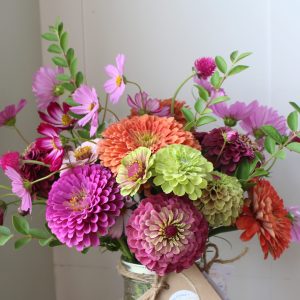
Zinnias are one of my favorite seeds for a summer cutting garden. They are cut-and-come-again flowers, which means regular harvesting encourages them to keep blooming. They are wonderfully beginner friendly, but a few simple habits make the plants healthier and the stems much better for bouquets.
Zinnia flower garden checklist
- Choose a sunny location. Aim for at least six to eight hours of direct sunlight. Zinnias are happiest in an open, bright location; too much shade can leave them stretched and less productive.
- Prepare and loosen the soil. Remove grass and break up the upper layer of soil with a shovel or tiller so seeds have a loose, workable bed to germinate in.
- Choose your zinnia seeds. There are so many colors, sizes and flower forms available. Pick varieties suited to cutting if long stems and bouquets are your goal.
- Wait until after the last frost. Zinnias are warm-season flowers. Do not rush them into cold soil; wait until frost danger is past and nights are staying warmer.
- Let the soil warm up. Germination is strongest in genuinely warm soil. A soil temperature around 70–75°F is a useful target, so patience in spring can pay off.
- Give plants about nine inches of room. This is a helpful starting spacing for many cutting zinnias. If you broadcast or scatter seed, thin the seedlings later so air can move through the patch.
- Cover seed lightly. A thin layer—roughly a quarter to half inch—of fine soil or compost keeps the seed in place and gives it the darkness it needs for germination.
- Water after sowing. Settle the seed into the soil gently, then keep the bed damp rather than saturated while you wait for germination.
- Keep young seedlings evenly moist. During the first few weeks, avoid both extremes: bone-dry soil and soggy soil can each slow healthy growth.
- Thin crowded seedlings. Once true leaves appear, remove weaker or tightly packed seedlings so the remaining plants have enough space. Better airflow also helps reduce disease pressure.
- Mulch once plants are established. A light organic mulch can suppress weeds, hold moisture and moderate soil temperature during hot weather.
- Pinch after several sets of true leaves. I usually pinch once the young plant has around three sets of true leaves. Removing the top growth encourages branching and ultimately gives you more stems to cut.
- Support tall plants early. Stakes, cages or flower netting can keep stems upright through summer storms. Install support before the plants become a tangled wall—it is much easier that way!
- Harvest during the cool part of the day. Morning or evening is ideal because the flowers are better hydrated and less stressed by heat.
- Use the wiggle test. Gently move the stem a few inches below the flower. If the neck bends and feels floppy, wait. If it stays firm, the bloom is mature enough to cut.
- Keep cutting. Snip above a healthy set of leaves and return often. Consistent harvest keeps a cut-and-come-again zinnia producing instead of putting all of its energy into aging flowers and seed.
With these basics in place, zinnias can fill the garden with color for months. From choosing a sunny site to harvesting regularly, each step builds toward stronger plants and a steadier supply of flowers. Whether you are growing bouquets or simply want a joyful summer garden, zinnias are one of the most forgiving places to start.