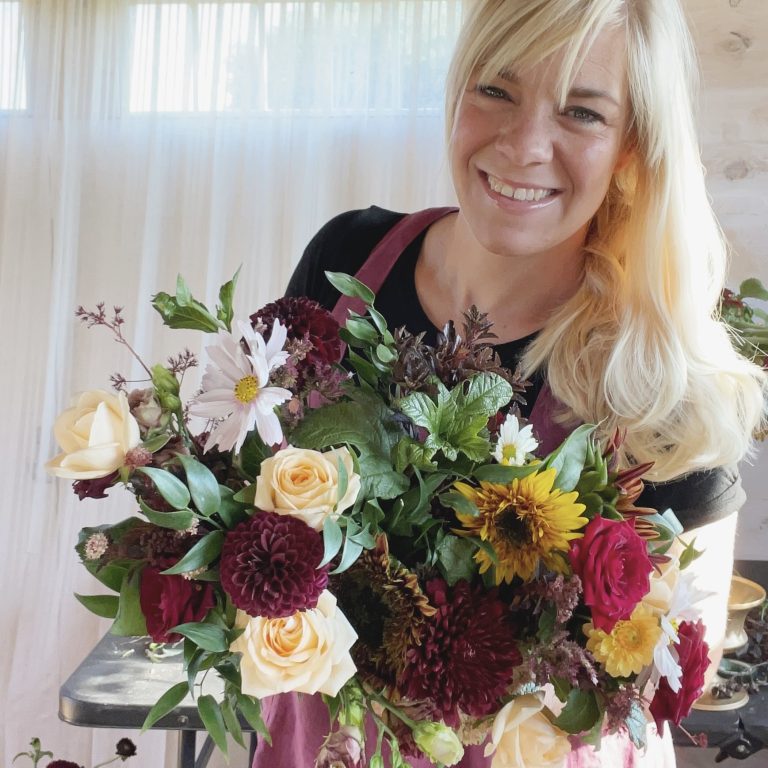
If you have ever pictured yourself carrying fresh flowers from the backyard into the kitchen—or making a bouquet to give someone—you already understand a big part of the appeal of a cut flower garden. When I started my first one, I had no idea how much it would change my life. Growing flowers gave me something hopeful to look forward to, a reason to get outside, and a daily connection to nature.
Cut flower gardening and flower farming continue to grow in popularity because they combine beauty with usefulness. For some people it stays a joyful backyard hobby; for others, it can become part of a flower business. Either way, a cutting garden is a little different from a traditional ornamental flower bed.
1. It is designed to be harvested
The main goal of a cut flower garden is production. You intentionally grow flowers so you can cut them again and again for the house, for gifts, or for customers. Because blooms are regularly removed at the best harvest stage, the garden itself may not always look as continuously colorful as a landscape bed—and that is completely normal.
I think of it much like growing vegetables. You are raising a crop with the intention of bringing it inside and using it. Each flower also has its own ideal harvest stage, and learning that timing helps you get the best possible vase life.
2. It is filled with productive varieties
Some flowers simply perform better for cutting than others. I look for plants that give me long usable stems, hold up well in a vase, and—when possible—keep producing after I harvest them. Zinnias, cosmos, sunflowers, snapdragons and dahlias are all familiar examples.
Many popular cutting varieties are called cut-and-come-again flowers because frequent harvesting encourages the plant to send out more blooms. That makes every square foot work harder throughout the season.
3. Spacing is practical, not just decorative
A landscaping bed is often arranged primarily for visual balance. A cut flower bed has to be easy to work in. Rows and blocks make it simpler to water, weed, support plants and move through the garden with a bucket at harvest time.
I also tend to use the growing space efficiently. Plants can be closer than they would be in a purely ornamental bed, as long as they still have the airflow they need. Tall crops may need flower netting or another support system so stems stay upright and usable instead of flopping over.
4. It can be almost any size
You do not need a farm or acres of land to grow flowers for cutting. A small raised bed, a dedicated backyard patch, or even a group of containers can give you flowers for bouquets. A compact bed can be surprisingly productive when you choose varieties suited to your conditions and use succession planting to spread out bloom time.
Start with the space you actually have. A smaller garden that you can care for well is far more useful than an oversized plan that becomes overwhelming.
5. It brings the garden indoors
This is still my favorite part. A cut flower garden lets you enjoy what you grew twice: first outside while you care for the plants, and then again in vases around your home. It is such a simple way to celebrate the season, share flowers with people you love, and stay connected to what is happening in the garden.
I honestly cannot imagine not growing a cut flower garden now. The garden has helped me grow, too, and that sense of joy is a huge reason Blooming Joy exists.