Beginner-friendly flower seeds to direct sow
There is something so rewarding about growing a cut flower garden from seed, especially when the flowers are both beautiful and approachable. This list moves from cool-loving spring favorites such as nigella and larkspur to bold summer producers such as zinnias and sunflowers.
Direct sowing simply means planting the seed outdoors where it will grow instead of starting it indoors first. That makes these flowers especially useful for beginners, but they are productive enough that experienced growers rely on them too. With the right timing, this group can supply flowers and foliage for both fresh bouquets and dried work.
Disclosure: The original Blooming Joy article includes affiliate recommendations. Product recommendations should always be chosen for your own garden and growing conditions.
1. Nigella
Nigella is one of my favorite dual-purpose annuals. In spring it gives you whimsical flowers surrounded by airy foliage, and later it produces beautiful seed pods that are wonderful for drying. It prefers a sunny location and a cool growing season, and it can happily self-sow if mature pods are allowed to drop seed.
For fresh flowers, I harvest as the buds show color and begin opening. For dried work, I leave the stems until the pods are fully developed but still have good color. African Bride, Delft Blue and Miss Jekyll are all varieties worth looking for.
2. Bachelor’s buttons
Bachelor’s buttons are cheerful, cottage-style flowers that are extremely easy to direct sow. They like full sun, establish quickly and often reseed themselves. Cooler weather suits them well, so they are useful for early spring sowing or fall sowing where the climate allows it.
For cutting, I like to harvest just as the flowers begin to open. That gives you bright color and good vase performance without waiting until the bloom is already aging in the garden.
3. Larkspur
Larkspur gives you tall, airy flower spikes right when the spring garden begins to come alive. Here in my climate, I prefer to fall sow it outdoors because the seed germinates best in cooler soil. Once established, larkspur is impressively winter hardy.
It does not need pinching and is essentially a one-cut crop. Netting can help if your garden is exposed, but the stems often stand well on their own. It also dries beautifully. For fresh use, harvest when roughly the lower third of the florets have opened so the rest can continue to open in the vase.
4. Zinnias
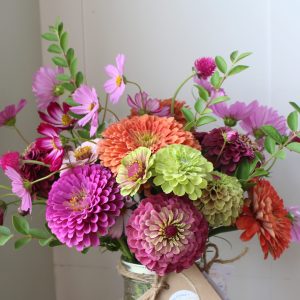
Zinnias are one of the ultimate cut-and-come-again summer flowers. Once frost danger has passed and the soil is warm, they can be direct sown in full sun. Pinching young plants encourages branching, and support netting helps keep the heavy summer growth upright.
The more you cut zinnias, the more they produce. At harvest, I use the wiggle test: gently move the stem near the flower. If the neck is floppy, it needs more time; if it feels firm, it is ready for the vase.
5. Cosmos
Cosmos are another excellent beginner flower. They grow into tall, branching plants covered in soft, romantic blooms. Direct sow after your last frost in full sun, thin them so they have room to grow, and pinch above a lower leaf node to create more branches.
Because cosmos can reach several feet tall, I strongly prefer to support them. Keep harvesting and they will continue to bloom. For the best vase life, cut when the bud has strong color and is just beginning to open.
6. Celosia
Celosia brings so much texture to summer bouquets, from plumes and spikes to crested forms. It loves heat, direct sows well after frost, and benefits from early pinching if you want more branches and stems.
By later summer the plants can be incredibly productive, and they often set plenty of seed for future seasons. Harvest once the color is fully developed and the flower head feels firm. Pampas Plume and Flamingo are two fun types to explore.
7. Sunflowers
Sunflowers are fast, cheerful and very satisfying to grow from seed. For bouquets, I look for pollenless cutting varieties and sow them in full sun once frost danger has passed. Some varieties can be ready in roughly two months.
Many cutting sunflowers are one-cut-and-done, so succession planting matters. Sow a small batch regularly instead of planting everything on one date. I like to harvest when the first petal is just beginning to lift away from the center; the flower will continue opening indoors.
8. Tall marigolds
For a cut flower garden, look for taller marigolds bred to produce usable stems. They bring saturated summer and fall color, can grow several feet tall, and keep producing as you harvest them.
Direct sow in full sun after frost. Taller plants may benefit from support. I like to cut when the flower is around halfway open, and the blooms can also hold their color surprisingly well when dried.
9. Basil—let it flower!
Basil is not just for the kitchen. If you let it flower, it becomes a fragrant, textural filler for arrangements. Sow it in full sun and pinch when the plants are young so they branch well.
For bouquets, wait until the stems have become a little woody and the flowers are developed. Lemon basil is one of my favorite varieties because it adds both soft texture and a fresh herbal scent.
10. Bupleurum
Bupleurum is a beautiful green filler that can tie an entire arrangement together. In mild climates it can be sown outdoors in fall, and once established it handles cold weather very well. It should not be pinched because it is essentially a one-cut flower.
The stems are delicate, so support netting can be useful. If you let some plants go to seed, they may self-sow for the next season. Harvest when the flowers are fully open and glowing green.
A note about flower netting
Netting is one of those things that is easiest to install before you think you need it. Zinnias, cosmos, bupleurum and tall marigolds can become top-heavy quickly. Putting support in early guides stems through the grid as they grow and helps you end up with longer, straighter stems for bouquets.